How to Tell a Tree Has Become Dangerous
Trees rarely fail without warning. The signs are just easy to miss until you
know what to look for. A trunk that has died or is dying back from the top
loses its grip on its own limbs first, which is why dead tree removal calls
so often start with a branch through a windshield. Vertical cracks and splits
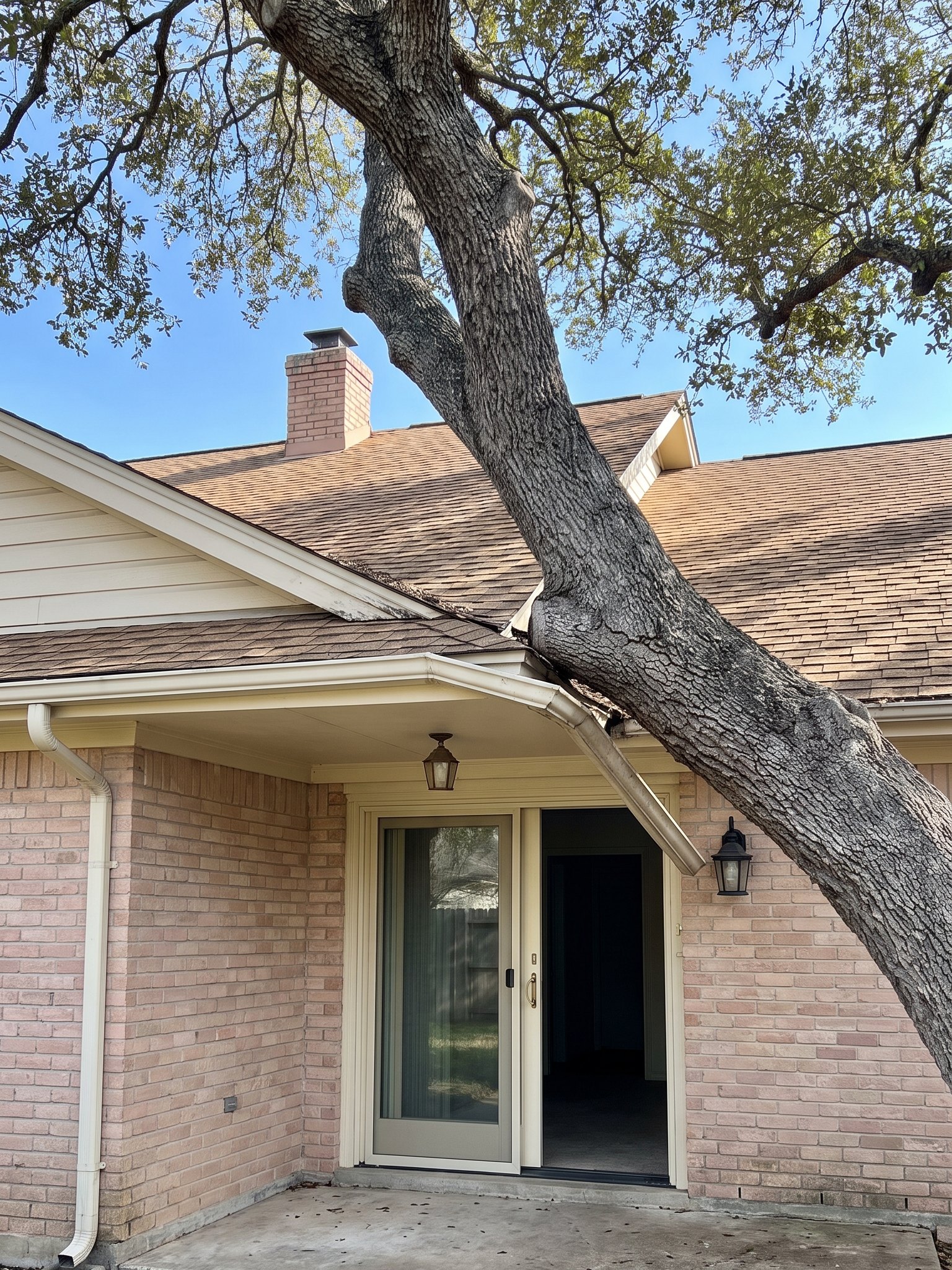
in the trunk mean the wood is separating under load. A lean that showed up
after a wet stretch, especially with soil heaving or roots lifting on the
back side, means the root plate itself is letting go.
Hollow sections you can knock on, mushrooms fruiting at the base, and hung
widow-maker limbs lodged in the canopy after a storm round out the list.
Any one of these is reason enough to have someone look. Two or more together
is a tree that has moved from a maintenance item to a hazard, and leaning
tree removal gets more complicated the longer the lean is left to grow.
Controlled Removal Next to Homes and Power Lines
Hazardous tree removal is a different job than dropping a tree in an open
pasture. When the target zone is a roof, a fence, or a neighbor's garage,
nothing falls free. Our climbers set rigging and lowering lines high in the
tree, then take it apart with section-down cuts, roping each limb and trunk
piece to the ground under control. The worst trees, the ones too rotten to
climb or leaning too hard to trust, get crane assistance so no one has to
put their weight on compromised wood.
A tree over power lines adds one more layer. We coordinate with the utility
before any work starts near energized lines, so drops are de-energized or
protected and the crew can work without guessing. It takes a phone call and
a little patience, and it is the only right way to do that job.
Emergencies Do Not Wait for Business Hours
Our regular schedule runs Monday to Saturday, but a tree does not check the
clock before it comes down. That is why our emergency tree removal line at
(817) 458-8360 answers 24/7. If a tree fell
on your house, punched through a roof, or dropped across your driveway and
trapped your vehicles, that call jumps the schedule. We stabilize the
situation first, tarp and shore where needed, and get the weight off the
structure as soon as it is safe to work.
After a big blow rolls through Parker County, one downed tree is often the
least of it. For limbs, brush, and debris scattered across the whole
property, our storm cleanup crew handles the
wider mess once the immediate hazard is gone.
Priced Honestly and Documented for Insurance
Hazard work invites bad actors who quote scared homeowners whatever they
think the fear is worth. We do it differently. The assessment is free, and
you get a written quote before we make a single cut. Most removals in our
area run $300 to $2,500, and hazardous jobs sit at the upper end of that
range because of the extra rigging and time they demand. Complex
crane-assisted removals are quoted individually.
If insurance is involved, we photograph the tree and the damage before and
after the work and send you an itemized invoice, so your adjuster gets a
clean file instead of a shoebox of guesses. And if your tree is healthy and
just needs to come out, our routine tree removal
service covers it, with tree and stump
removal available when you want the stump gone in the same visit.