Post Oaks and Live Oaks Are Different Trees
Most yards around Weatherford hold one of two oaks, and they could hardly be more
different. The post oak is a slow, stubborn native that was probably standing
before the house was built. It hates having its roots disturbed, it stores very
little energy in reserve, and it punishes over-pruning. Strip too much canopy
from a post oak in one visit and it can sulk for years, thin out at the top, and
never fully come back. Live oaks are the opposite problem: fast, sprawling, and
heavy, with long horizontal limbs that creep over roofs and sag toward driveways
until something has to give.
Trimming oak trees well starts with knowing which one you are standing under.
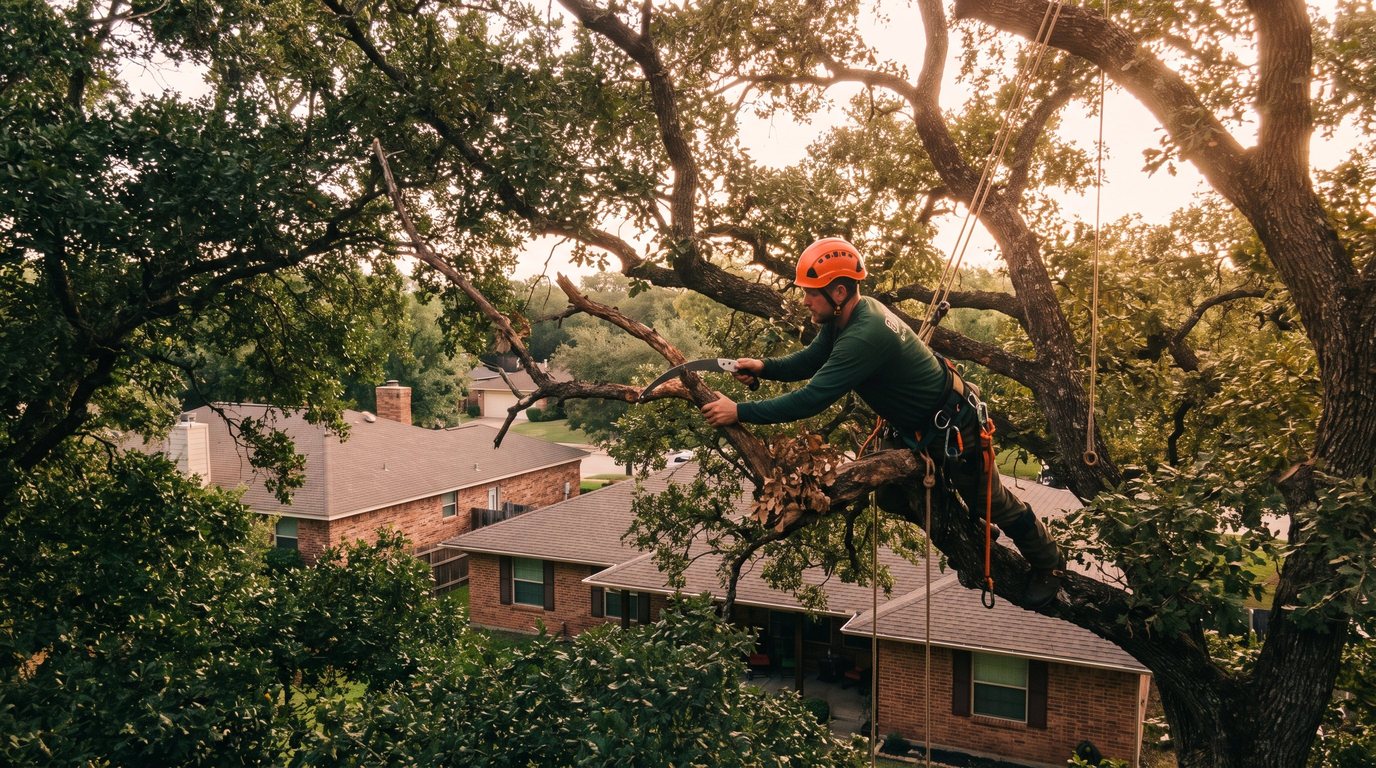
Our crews prune post oaks lightly and less often, and they manage live oaks with
weight reduction on the long limbs before those limbs fail. It is the same
careful approach we bring to tree trimming across Weatherford,
applied to the trees that matter most on your property.
Oak Wilt: When Not to Trim
Oak wilt is the one disease every oak owner in Parker County needs to take
seriously, and it spreads through fresh pruning cuts. In late winter and spring,
sap-feeding beetles pick up spores from fungal mats on infected red oaks, then
land on any fresh oak wound they can find. A cut made in April can infect a
healthy tree that has stood for a century. That is why we never prune oaks from
February through June, no matter how convenient the timing would be.
Instead, we schedule oak work for the dormant and late-summer months, July
through January, when the beetles are far less active and the fungus is not
producing spores. And because no calendar is perfect, we seal every oak cut with
pruning paint the moment it is made, even in the safe season. If another company
offers to trim your oaks in the spring without a word about oak wilt, that alone
tells you what they know.
What Good Oak Pruning Looks Like
Done right, oak tree pruning in Weatherford is quiet, selective work. We take out
the deadwood first, because dead oak limbs are the ones that drop without
warning. Then comes crown cleaning: rubbing branches, weak crotches, and stubs
left behind by old storm breaks. Where a canopy hangs low, we lift it for
clearance over roofs, gutters, and drives, cutting back to healthy laterals so
the tree keeps its natural shape.
Just as important is what we will not do. We never top an oak, and we never
lion-tail one by gutting the interior growth and leaving tufts at the branch
tips. Both practices force weak, fast regrowth and set the tree up for bigger
failures later. When our climbers come down, your oak should look like itself,
only cleaner, lighter, and safer over everything below it.
Storm-Split and Overgrown Oaks
North Texas storms are hard on big canopies, and a split leader or a torn limb
does not always mean the tree is finished. If the main trunk is sound, we can
usually rebuild a damaged oak with restoration pruning spread over several
seasons, removing the wreckage now and shaping the regrowth on later visits so
the tree recovers with strong structure instead of weak sprouts. Oaks that were
neglected for a decade get the same patient treatment.
Sometimes, though, oak tree removal is the safer call: a hollow trunk, a split
that runs into the main stem, or a lean that gets worse every wet week. We will
tell you honestly which side of the line your tree is on. When it cannot be
saved, our tree removal crew takes it down safely,
and after a big blow our storm cleanup team can
clear the debris the same week.